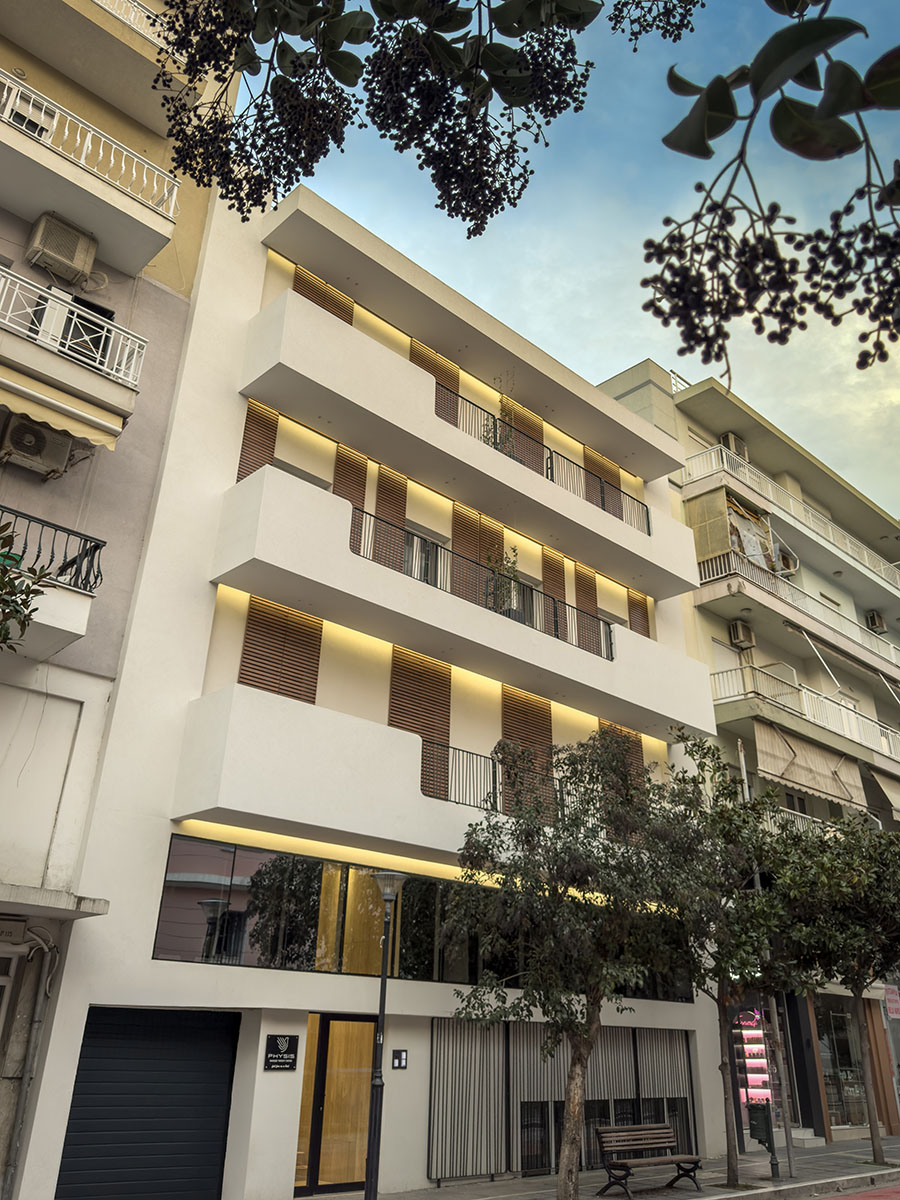
Tsigarasdesign studio undertook the change of use and redesign of a 1970s building, formerly operating as a maternity clinic and recognised as a city landmark. The intervention preserves its place in collective memory, transforming it into a contemporary office and residential building with a renewed architectural identity.
An exhibition space within the building maintains the legacy of its former use, integrating original medical instruments into a restrained setting where memory becomes part of the design narrative.
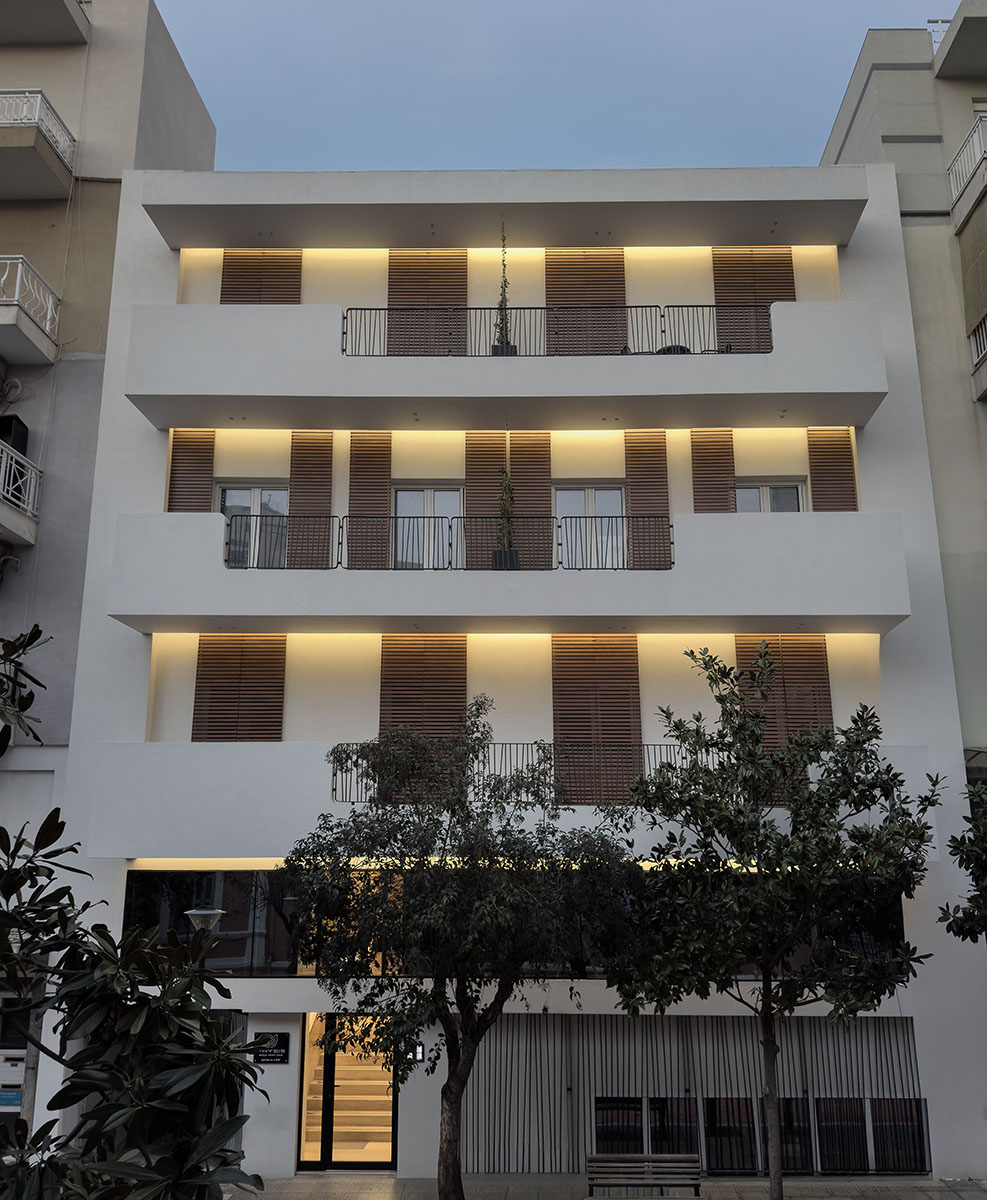
The façade is defined by a controlled horizontal composition, with projecting slabs creating layers, shading and movement. White volumes form a neutral background, while black metal railings add permeability and lightness.
At mezzanine level, continuous mirrored glazing reflects the adjacent historic building, connecting the new façade with its urban context. Integrated linear lighting completes the composition, highlighting the building’s geometry and architectural expression at night.
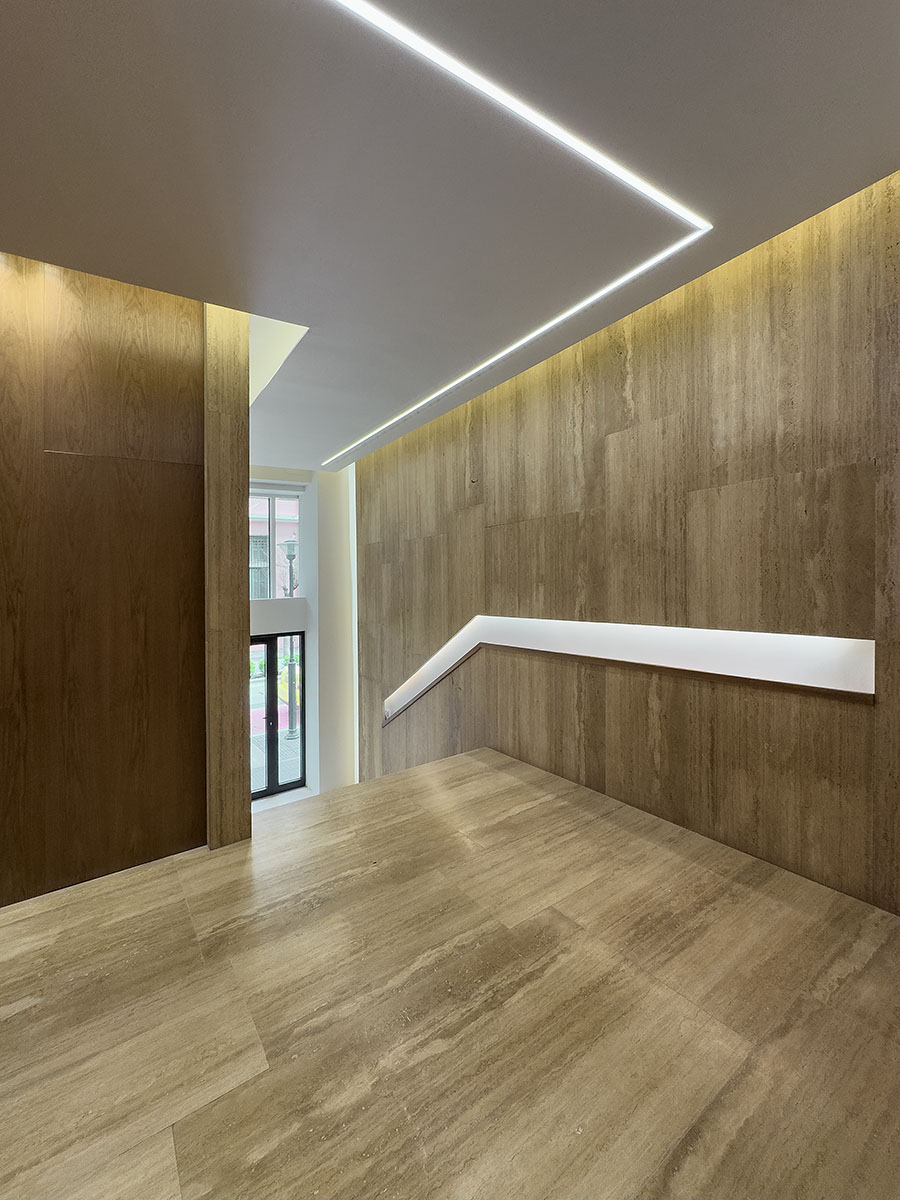
The proposal by tsigarasdesign studio reconsiders the entrance as an autonomous architectural space, reintroducing the intensity, quality, and aesthetic that defined the entrances of urban buildings in the 1960s—qualities that have largely diminished in contemporary construction. Through a controlled and contemporary language, the space regains a clear identity and architectural presence.
The architectural design of the residential entrance in Alexandroupoli is defined by geometric clarity, a restrained expression of materials, and integrated lighting. Natural travertine marble and walnut wood are articulated into continuous, precise surfaces that guide movement and clearly organise the spatial hierarchy.
At the point of entry, a linear incision is formed, following the geometry of the space and functioning as a handrail, allowing the composition to define both geometry and movement.
As a cohesive architectural intervention, the project moves beyond the mere application of materials, establishing a unified spatial experience. Linear lighting is discreetly integrated, enhancing depth, articulating geometry, and reinforcing the overall compositional intent.
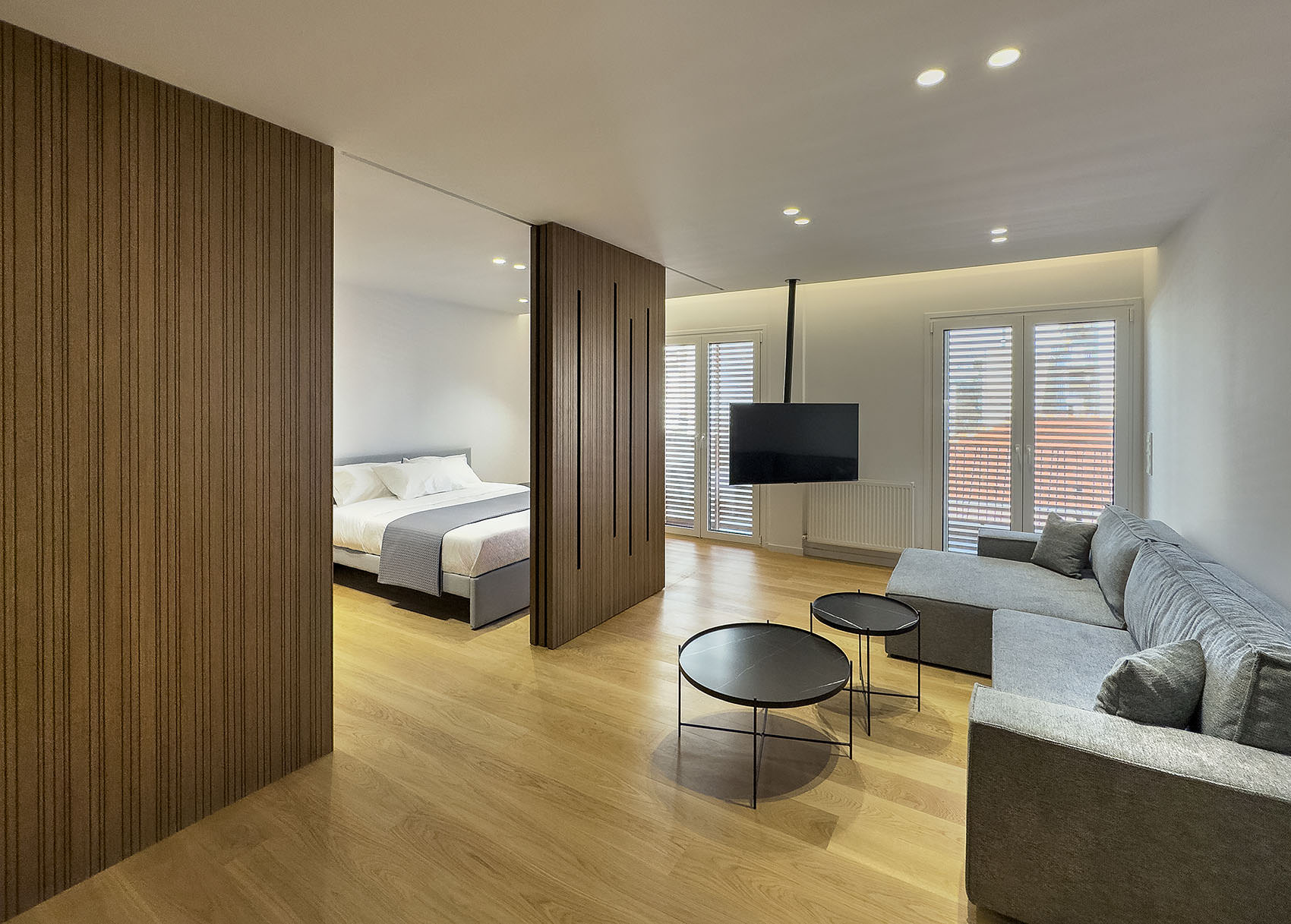
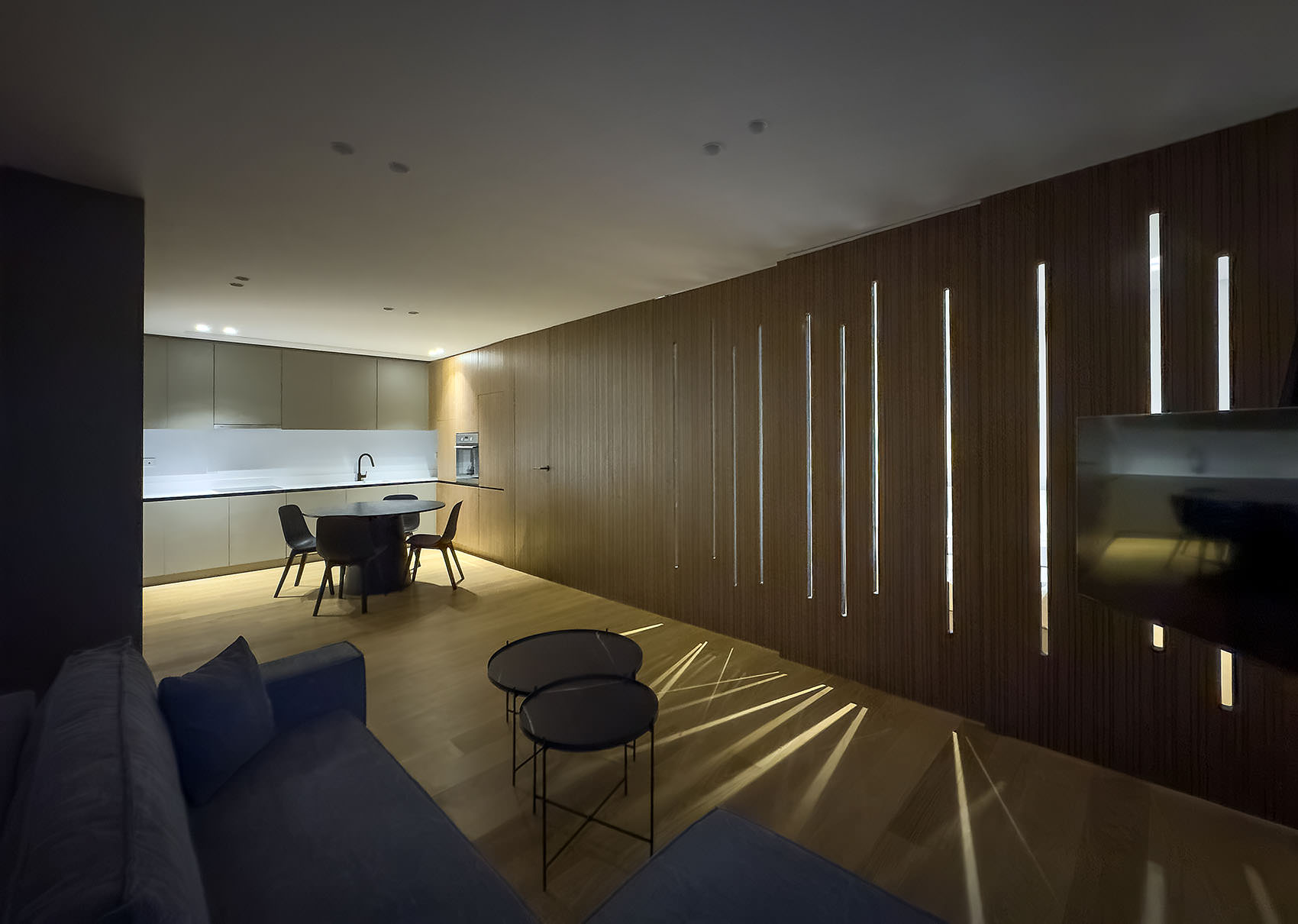
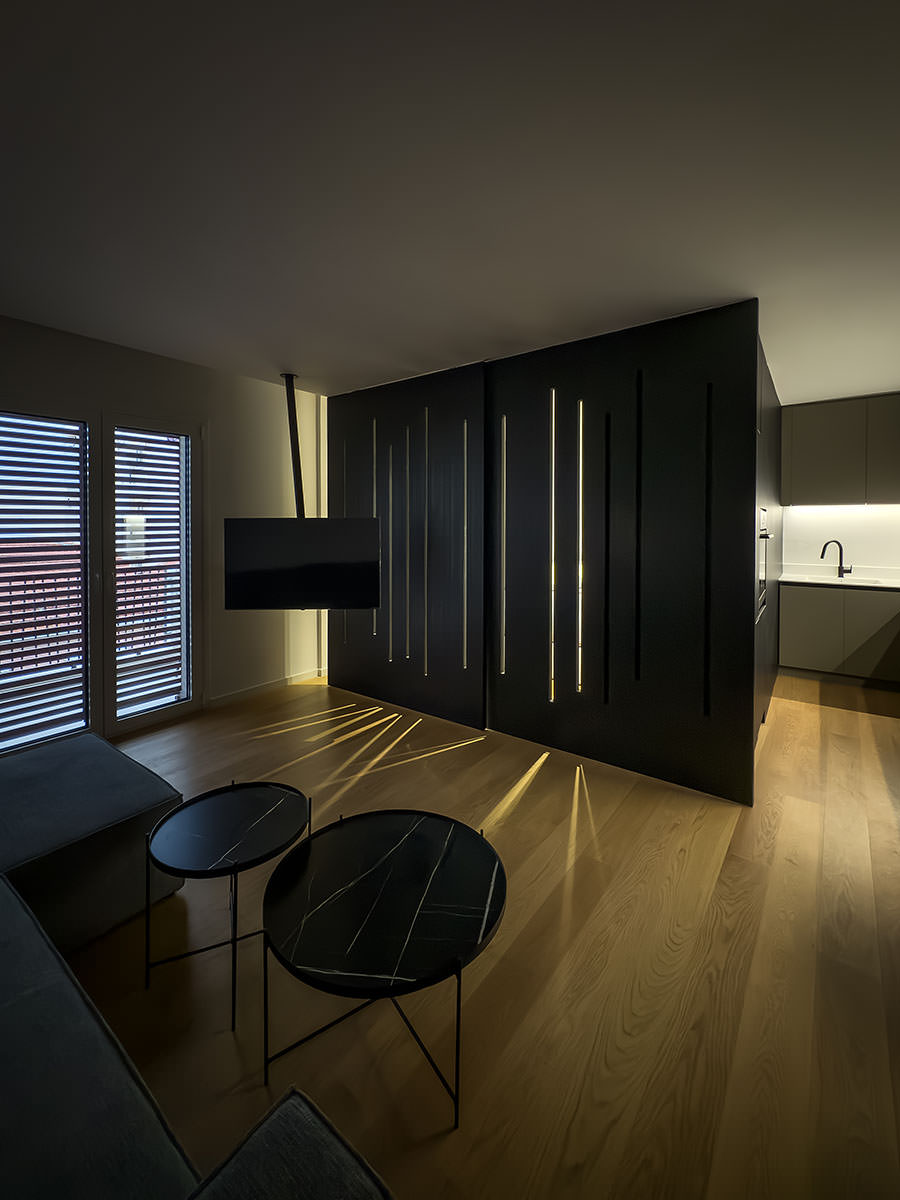
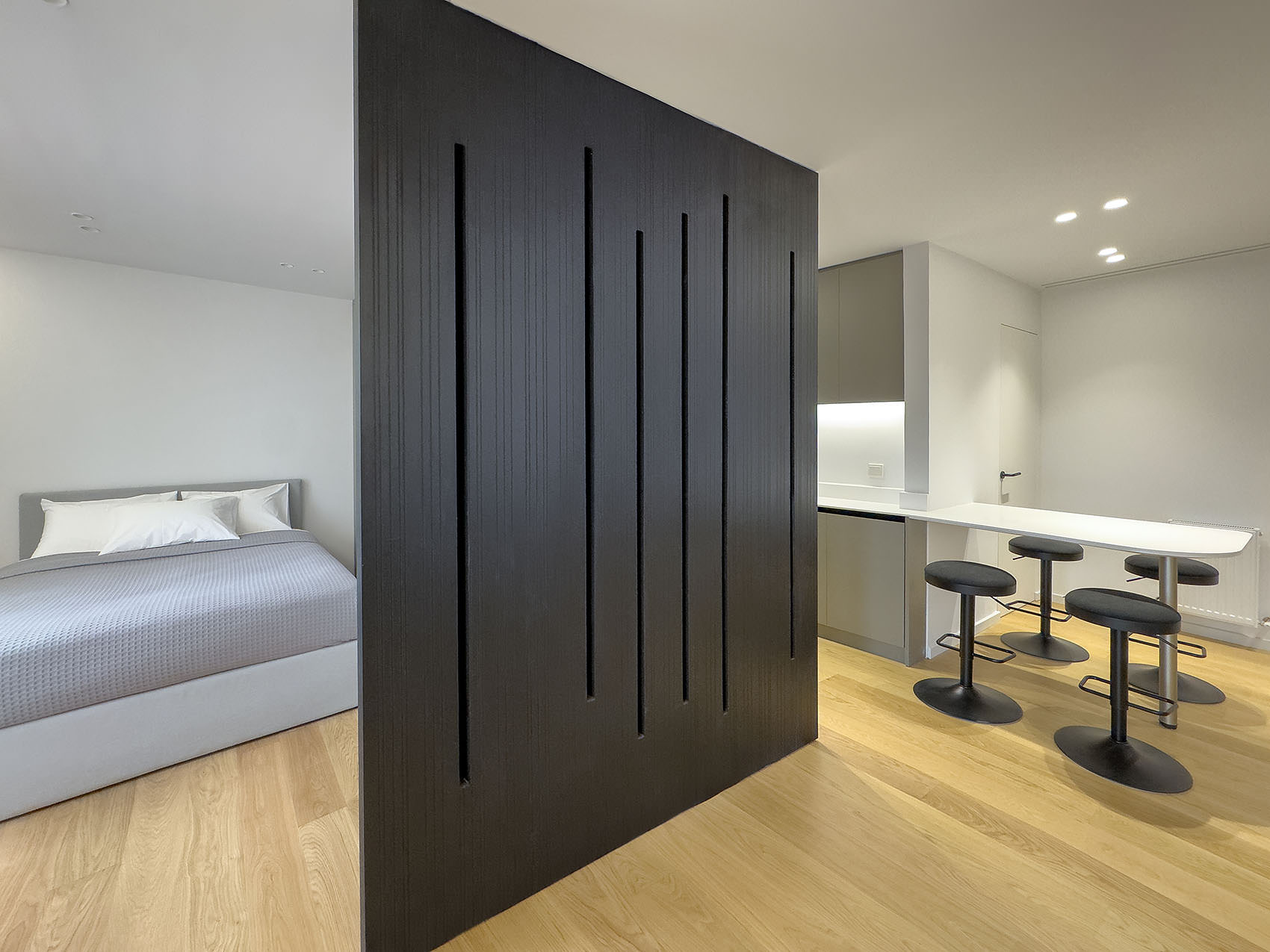
Tsigarasdesign studio develops the interior of the two studio apartments through a linear layout, where individual functions are both separated and connected by a central vertical sliding partition. Its displacement redefines the use of the space each time, allowing for flexible spatial configurations and a controlled gradation of privacy.
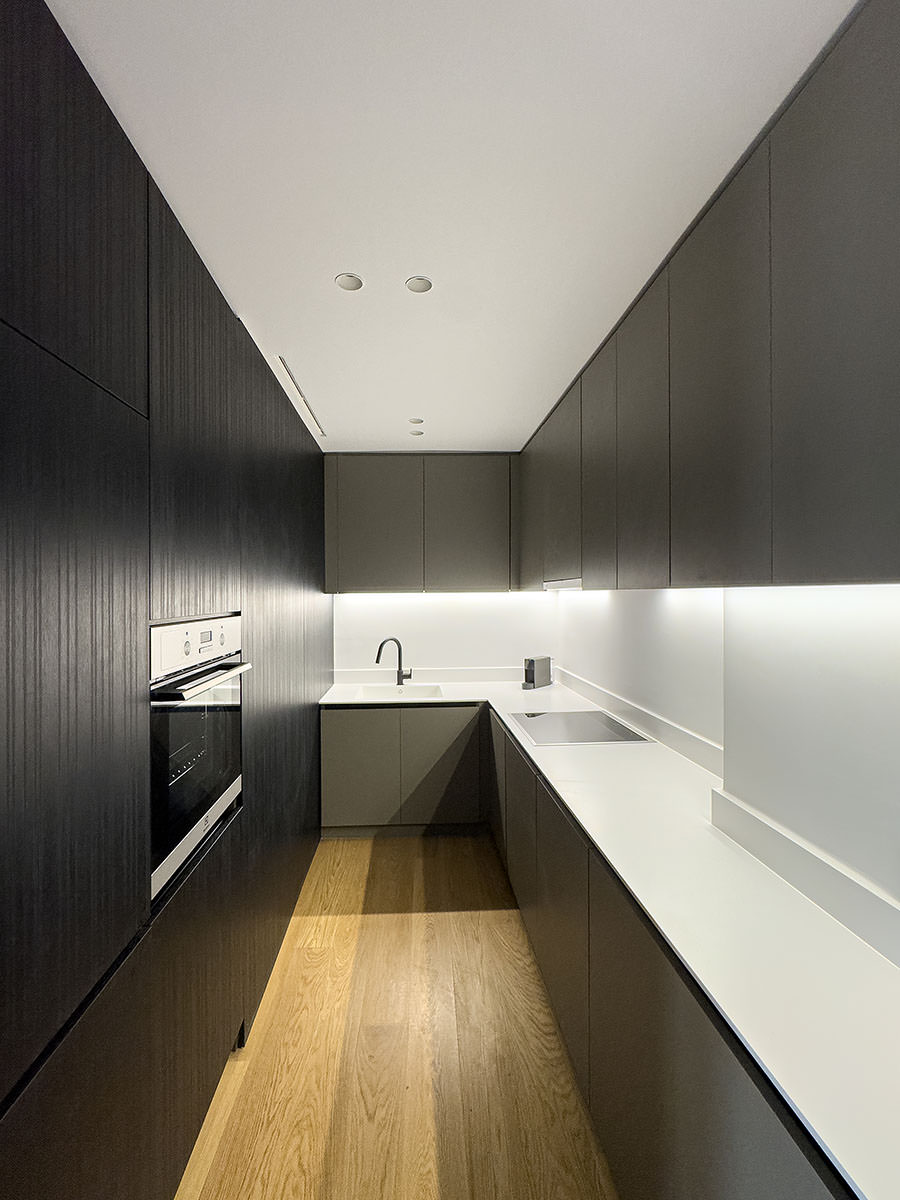
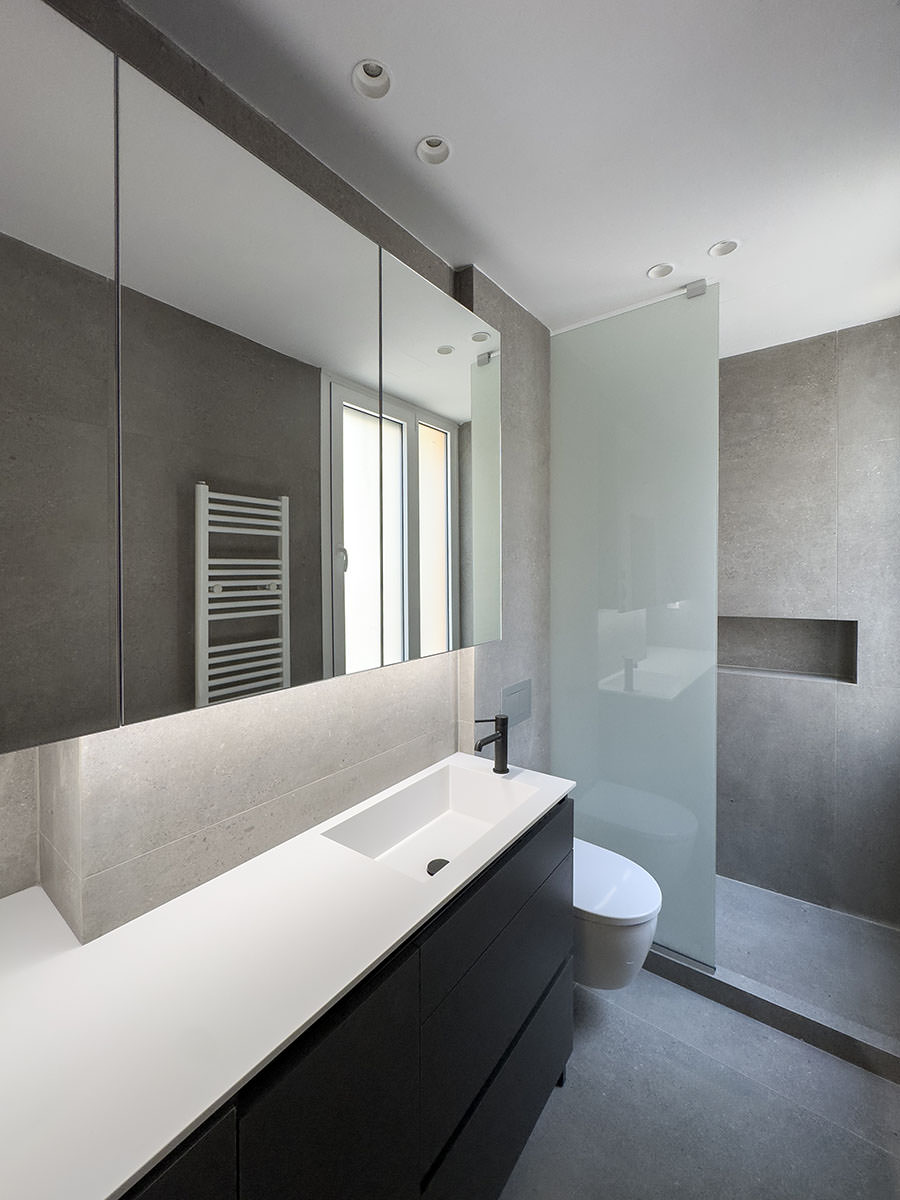
Each studio, as designed by tsigarasdesign studio, is conceived as an autonomous spatial condition with a distinct material identity. In the first, the composition unfolds through brown and grey tones combined with white surfaces, resulting in a more subdued and balanced character. In the second, the use of earthy tones, in combination with a black vertical cladding and a grey kitchen, intensifies contrast, introducing greater depth and spatial tension.
These vertical surfaces operate as a primary compositional element, simultaneously defining boundaries and connections, while, in contrast with the white surfaces, they enhance the legibility of the spatial organisation.
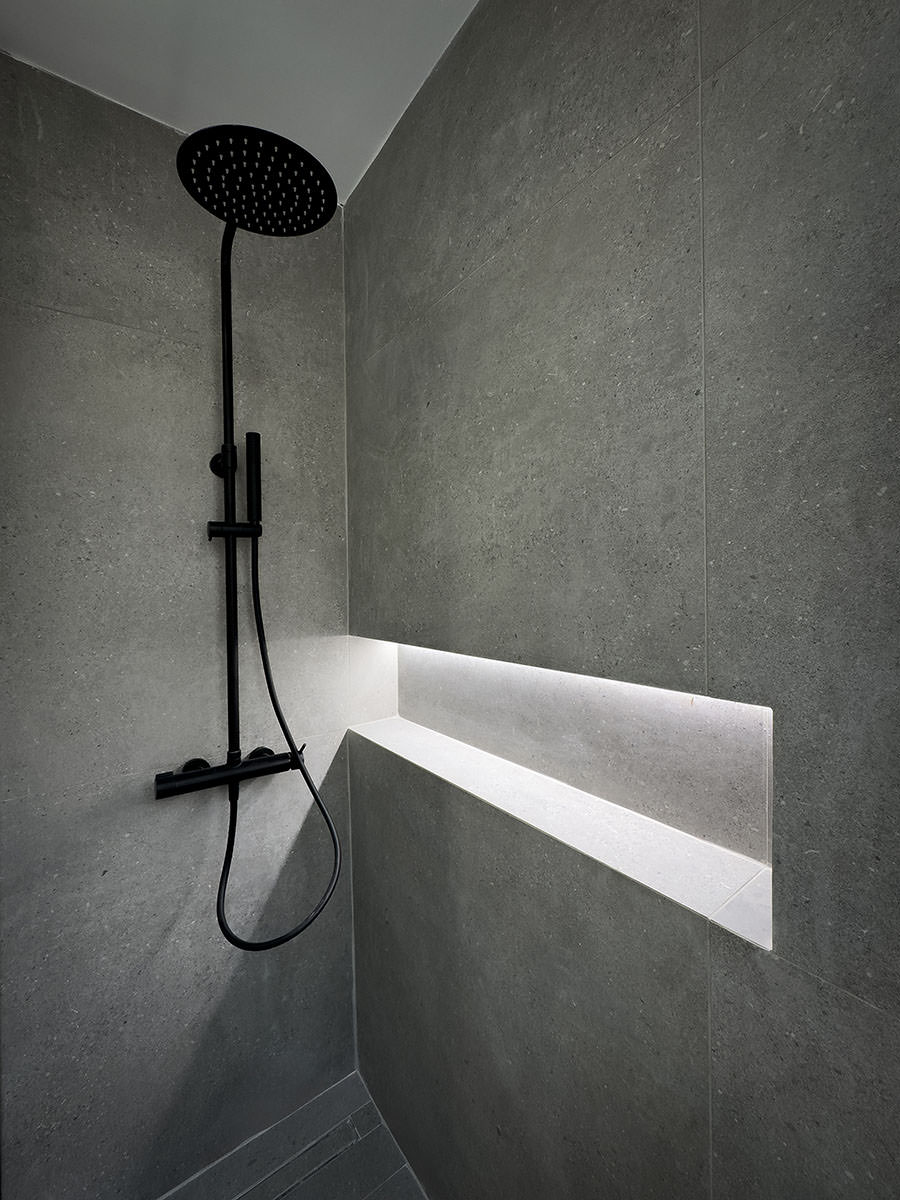
Integrated lighting, conceived as an inherent part of the design by tsigarasdesign studio, reinforces the geometry, highlights the incisions, and supports the overall architectural expression.
Within the former maternity clinic, tsigarasdesign studio introduces an exhibition space that preserves and reinterprets the building’s past. Original medical instruments remain in place and are recontextualised as exhibits, forming a quiet yet powerful presence of the previous use.
The architectural approach by tsigarasdesign studio is deliberately restrained and precise. Rough, almost monolithic surfaces, combined with integrated linear lighting, create a neutral and controlled environment in which the objects take on a central role.
Rather than reconstructing the past, the space offers a clear architectural reading of memory. Through this approach, tsigarasdesign studio integrates the building’s history into its new identity, transforming the past into an active element of contemporary design.